What is Answer Engine Optimization (AEO)? The Future of SEO
Written by Habib Ur Rehman • Last Updated: November 11, 2026
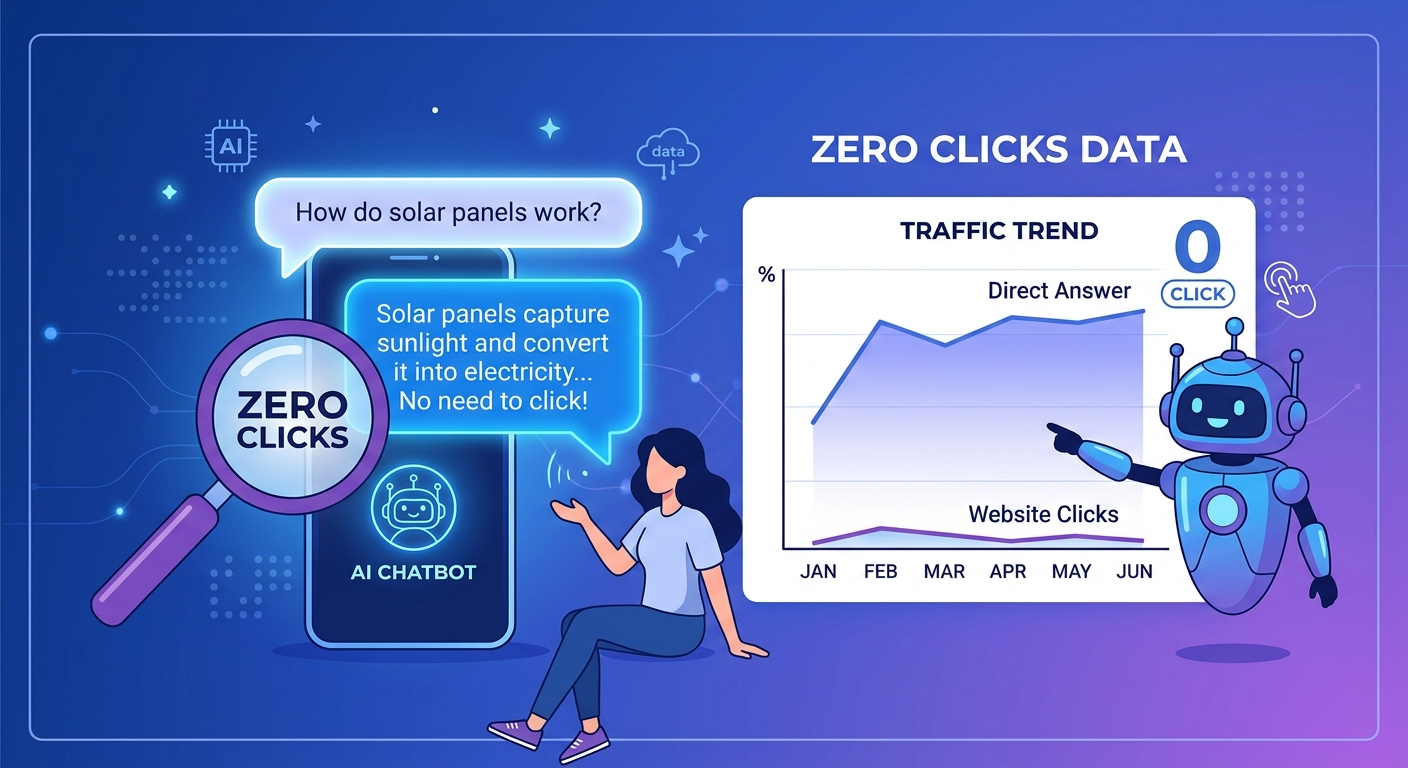
Quick Summary: Answer Engine Optimization (AEO) is the process of structuring your content so that AI-powered systems like ChatGPT, Google AI Overviews, and voice assistants can easily extract it and cite it as the answer to a user's question. Unlike traditional SEO, which focuses on ranking your website in a list of links, AEO focuses on being selected as the direct answer, often without the user ever clicking through to your site. Recent data shows that up to 78% of searches for certain topics end without a click, making AEO essential for brand visibility in 2026 and beyond.
Hello! If you have been doing SEO for a while, you know the game has changed. It is no longer just about ranking on page one of Google. The rise of AI-powered search engines like ChatGPT, Perplexity, and Google's AI Overviews has created a new challenge. Users are no longer clicking on ten blue links. They are getting their answers directly from the search results page or an AI chatbot.
This shift has given birth to a new discipline called Answer Engine Optimization, or AEO. In this guide, I will explain exactly what AEO is, why it matters, and how you can use it to keep your brand visible in this new era of search.
What is Answer Engine Optimization (AEO)?
Answer Engine Optimization is the practice of making your brand the most reliable and easy-to-quote source for the questions your audience asks across AI-powered systems. The goal is to be named and cited as the answer, not just to rank near it.
AEO spans across all platforms where a user asks a question and receives a synthesized response. This includes:
- Google AI Overviews
- People Also Ask boxes
- Featured snippets
- Voice assistants like Siri and Alexa
- AI chat platforms like ChatGPT, Perplexity, and Gemini
According to research, AEO involves three sequential outcomes: being retrieved by the AI system, being trusted enough to be selected as a primary source, and being cited with your brand name in the final answer. If you miss any of these steps, you are present in the information ecosystem but invisible in the answer.
The Shocking Data: Why AEO is No Longer Optional
The numbers speak for themselves. According to Similarweb, the average zero-click rate for the keyword "answer engine optimization" on Google is 78%. This means that nearly eight out of ten people who search for this topic get their answer directly on the results page without clicking through to any website.
This trend is not limited to one keyword. Data from Pew Research Center shows that when an AI summary appears in search results, users click on a traditional search result just 8% of the time, compared to 15% when no AI summary is present. That is a 47% reduction in click-through rate.
Another study by Fuel Online audited 1,000 top-performing enterprise domains and found that 62% of brands are "technically invisible" to generative AI models. When asked direct, unbranded questions about their core services, AI models failed to cite them in 81% of test cases.
These numbers reveal a harsh reality: if your brand is not being cited by AI, you are losing visibility to a massive portion of your audience. Traditional SEO is no longer enough.
How is AEO Different from Traditional SEO?
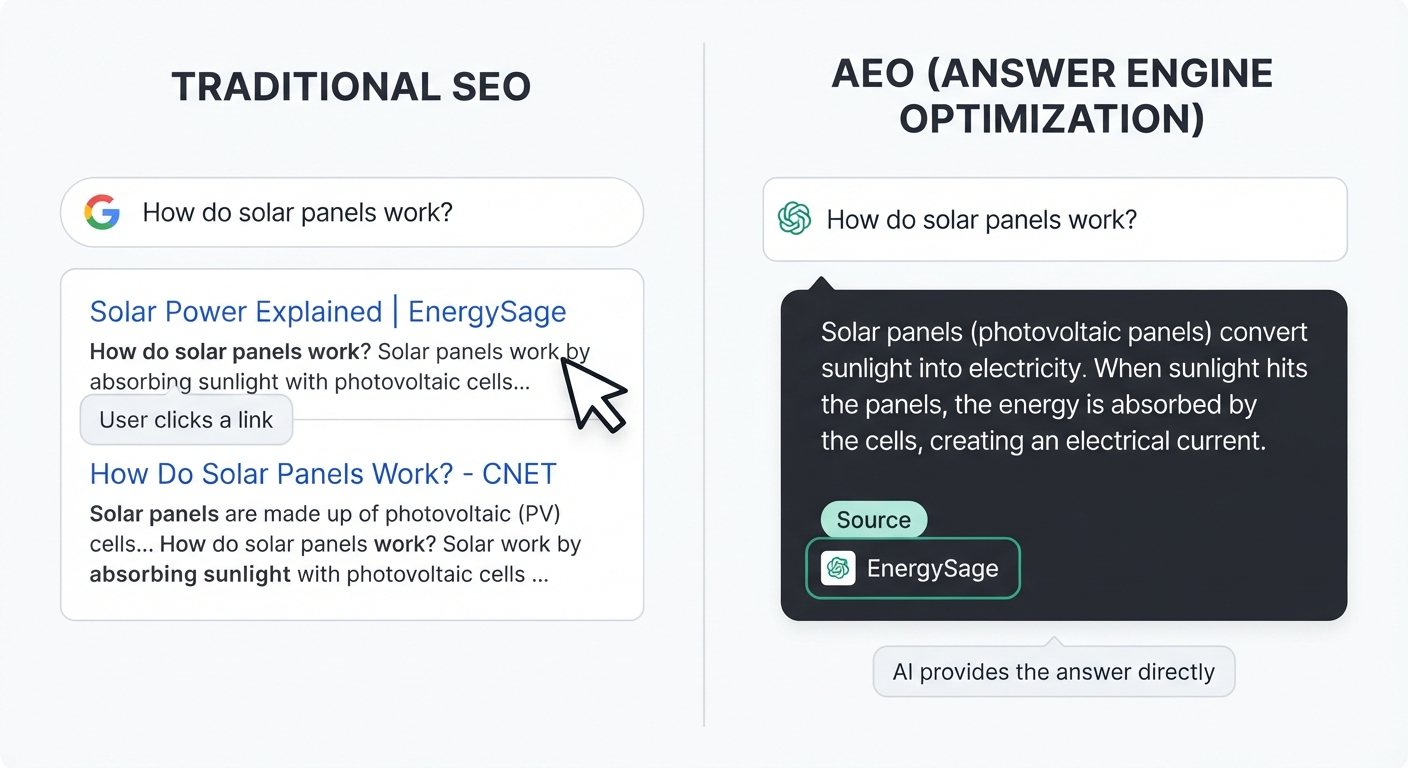
The core difference between SEO and AEO lies in the goal. SEO aims to rank your website in a list of links. AEO aims to be selected as the answer and cited as the source.
| Feature | Traditional SEO | Answer Engine Optimization (AEO) |
|---|---|---|
| Primary Goal | Rank high in search results. | Be cited as the direct answer. |
| User Behavior | User clicks a link and visits your site. | User reads the answer without clicking. |
| Success Metric | Organic traffic and rankings. | Brand citations and mentions in AI answers. |
| Content Format | Long-form articles, keywords. | Structured data, clear answers, citations. |
The Hidden Truth: Most Brand Mentions Come from Third-Party Sites
Here is a fact that most people do not know. According to a 2026 report by Man of Many, 85% of brand mentions in AI answers come from third-party sites, not the brand's own domain. Publishers and review sites are the largest single source of these mentions.
This means that even if you have the best website in the world, AI might not cite you if third-party sites are not talking about you. AEO is not just about optimizing your own pages. It is about building a presence across the entire web, including review platforms, forums, and industry publications.
Another surprising finding from Semrush is that only 15.2% of AI topic categories have a clear owner. The other 85% are unclaimed. This is a massive opportunity. If you can establish your brand as the authority in an unclaimed topic, you can become the default answer that AI provides.
How AI Systems Actually Choose What to Cite
To succeed in AEO, you need to understand how AI systems select their sources. According to research from Yext, which analyzed 17.2 million AI citations, different AI models have different retrieval patterns.
Gemini (Google's AI)
Gemini is heavily grounded in Google's search index. It frequently cites official brand websites and established sources. If your brand has strong first-party content, structured local pages, and solid traditional SEO foundations, you are more likely to show up here. Structured content still wins the citation.
Perplexity
Perplexity operates like a search engine that answers questions directly. It demonstrates some of the most stable citation behavior across sectors. It tends to pull from a mix of official websites and directories.
ChatGPT and Claude
ChatGPT and Claude perform live page fetches and depend on external retrieval systems. They tend to cite fewer sources but show higher average citation influence among fetched pages. High-influence pages are often longer and more detailed.
One consistent finding across all models is that verified, structured, directly distributed data made up 54.53% of distinct citation sources. This means that if your data is not structured and verifiable, you are less likely to be cited.
How to Optimize Your Content for AEO
Now that you understand the landscape, here is a step-by-step guide to optimizing your content for Answer Engines.
1. Identify the Exact Questions Your Audience Asks
AI systems are designed to answer questions. You need to know what questions your audience is asking. Use tools like AlsoAsked, AnswerThePublic, and Google's People Also Ask section to find these questions.
2. Structure Your Content for Easy Extraction
Write clear, direct answers to each question. Use short paragraphs, bullet points, and numbered lists. AI systems extract content that is easy to parse. Avoid long, rambling introductions.
3. Use Schema Markup
Schema markup helps AI understand the entities and relationships on your page. While some studies show that schema alone does not guarantee citations, it is a foundational element. Use FAQPage, HowTo, and Article schema to structure your content. You can use our Meta Tag Generator to create basic schema.
4. Build Authority Through Third-Party Mentions
Since 85% of AI mentions come from third-party sites, you need to get your brand mentioned on review sites, forums, and industry publications. This is called digital PR or off-page AEO.
5. Focus on Branded Web Mentions
Research from Rank.ai found that the correlation between branded web mentions and AI Overview visibility is 0.664, compared to just 0.218 for backlinks. This means that how often your brand is mentioned across the web is three times more important than traditional backlinks for AI visibility.
6. Do Not Block AI Crawlers
A staggering 34% of B2B SaaS companies actively block AI crawlers via robots.txt. This is a huge mistake. If AI cannot crawl your site, it cannot cite you. Make sure your robots.txt file allows AI bots. You can use our Robots.txt Generator to create a permissive file.
A Note from the Developer
"When I first heard about AEO, I thought it was just another buzzword. But when I looked at my own analytics, I saw that my organic traffic from Google was declining, even though my rankings were stable. The clicks were being absorbed by AI Overviews. I realized I had to adapt. I started restructuring my content to answer specific questions directly. Within a few months, I noticed my brand being cited in ChatGPT and Perplexity for niche technical queries. The traffic from those citations was small, but the brand authority was immense. AEO is not just about traffic; it is about being the source of truth." — Habib Ur Rehman
AEO Statistics You Need to Know
- 94% of enterprises plan to increase AEO and GEO investment in 2026.
- Only 16% of brands systematically track how they appear in AI search.
- 61% of ChatGPT answers to buyer questions name no business at all.
- AI referral traffic is a rounding error, accounting for 0.59% of sessions for one major publisher.
- 99% of shoppers who research with ChatGPT still consult Google for the final decision.
Frequently Asked Questions (FAQ)
What is Answer Engine Optimization (AEO)?
Answer Engine Optimization is the process of structuring your content so that AI-powered systems like ChatGPT, Google AI Overviews, and voice assistants can easily extract it and cite it as the answer to a user's question.
How is AEO different from SEO?
SEO focuses on ranking your website in a list of links. AEO focuses on being selected as the direct answer, often without the user clicking through to your site.
Why is AEO important in 2026?
Recent data shows that up to 78% of searches for certain topics end without a click. If your brand is not the cited source, you are invisible to a large portion of your audience.
Does AEO replace SEO?
No. SEO is the foundation. AEO is an additional layer that helps you get cited in AI answers. You need both to succeed in modern search.
Conclusion
Answer Engine Optimization is not a trend; it is a fundamental shift in how people find information. The data is clear: zero-click searches are rising, and AI is becoming the primary interface for answers. If you want your brand to remain visible, you must adapt your strategy to focus on being cited, not just ranked.
Start by identifying the questions your audience asks, structure your content for easy extraction, and build your brand presence across third-party sites. The future of SEO is not about clicks; it is about citations.
If you want to check your website's technical health, use our free tools like the Domain Authority Checker and Broken Link Checker. Happy optimizing!
Explore More Free SEO Tools
Written and reviewed by: Habib Ur Rehman, Full-Stack Web Developer & SEO Specialist.
Last Updated: November 11, 2026.