What is Generative Engine Optimization (GEO)? Full Guide
Written by Habib Ur Rehman • Last Updated: November 11, 2026

Quick Summary: Generative Engine Optimization (GEO) is the process of optimizing your content so that AI models like ChatGPT, Claude, and Perplexity can easily understand it, cite it, and include it in their generated answers. While SEO focuses on ranking links, GEO focuses on getting your brand mentioned inside the AI's text. To succeed in GEO, you need to structure your content in small chunks, add unique data, allow AI crawlers, and build brand mentions across the web.
Hello! The world of search is changing faster than ever. Just when we got used to Answer Engine Optimization (AEO) and AI Overviews, a new challenge has appeared: Generative Engine Optimization (GEO).
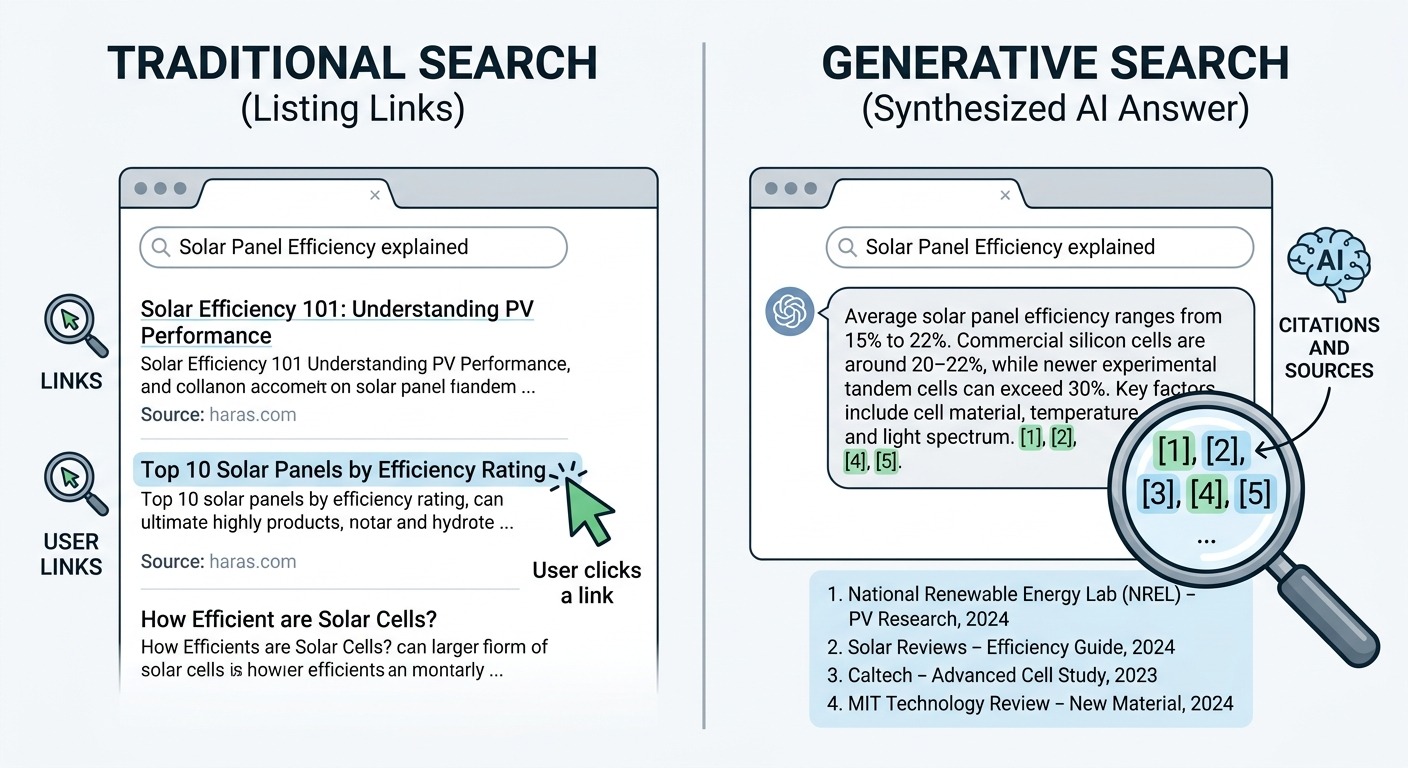
Generative engines like ChatGPT, Claude, and Perplexity do not just show you a list of links. They read the web, understand the information, and generate a unique answer for every question. If your brand is not part of that generated answer, you are invisible.
In this advanced guide, I will explain exactly what GEO is, how it works, why it matters, and the exact steps you need to take to get your brand cited by AI models. Let's dive in.
What is Generative Engine Optimization (GEO)?
Generative Engine Optimization is the practice of structuring your content so that Large Language Models (LLMs) can easily extract it, trust it, and use it to generate answers. It is the art of becoming the source that AI cites.
Think of it this way: Traditional SEO is like trying to get your book on the front shelf of a library. GEO is like getting your book quoted in the librarian's summary when a visitor asks a question.
Generative engines rely on a process called Retrieval-Augmented Generation (RAG). When a user asks a question, the AI searches the web for relevant information, reads the top pages, and then writes a new answer based on what it found. If your page is chosen as a source, the AI will usually mention your brand name in the answer.
The Hidden Truth About How AI Reads Your Content
To succeed in GEO, you need to understand a secret about how AI models work. AI models do not read your page from top to bottom like a human. They break your page into small pieces called chunks.
This process is called Semantic Chunking. The AI looks at each paragraph or section and tries to understand its meaning in isolation. If a chunk is too long, the AI might get confused and skip it. If a chunk is clear, concise, and contains a unique fact, the AI will likely remember it and use it.
This is why writing short paragraphs and using clear headings is so important for GEO. You are not just writing for humans; you are writing for the AI's chunking algorithm.
The Shocking Data: Why GEO Matters Right Now
If you are still not convinced about GEO, look at the data. According to a recent study by Princeton University, simply adding citations and quotes to your content can increase your visibility in generative AI answers by up to 40%.
Another study by Yext found that 61% of ChatGPT answers to buyer questions name no business at all. This means there is a massive opportunity for brands that can figure out how to get cited.
Furthermore, research shows that 85% of brand mentions in AI answers come from third-party sites, not the brand's own website. If you are only optimizing your own site, you are missing the bigger picture.
How is GEO Different from SEO and AEO?
| Feature | Traditional SEO | AEO | GEO |
|---|---|---|---|
| Primary Goal | Rank in a list of links. | Win a featured snippet. | Get cited inside an AI answer. |
| User Behavior | Clicks a link. | Reads the answer on Google. | Reads a synthesized answer. |
| Target Platforms | Google, Bing. | Google AI Overviews, Voice. | ChatGPT, Claude, Perplexity. |
| Content Format | Long text, keywords. | Direct answers, schema. | Chunked data, unique stats, citations. |
The 6-Step Strategy for GEO Success
Now that you understand what GEO is and why it matters, let's look at the actionable steps you can take to optimize your website for generative engines.
1. Structure Your Content in Chunks
As we discussed, AI models break your content into chunks. To make your content easy to extract, keep your paragraphs short (under 4 sentences). Use clear H2 and H3 headings that describe the content. Use bullet points for lists. This makes it easy for the AI to isolate the specific answer it needs.
2. Include Unique Statistics and Data
AI models are trained to prioritize factual and authoritative information. If your article is just a summary of what other people have said, AI will probably ignore it. If you have original data, unique research, or specific numbers, AI will be much more likely to cite you.
For example, instead of saying "many people use mobile," say "According to a 2026 report, 78% of users browse the web on mobile." The specific number makes your content a stronger source.
3. Do Not Block AI Crawlers
This is the biggest mistake you can make. Many websites block AI bots like GPTBot, ClaudeBot, or PerplexityBot in their robots.txt file. They do this because they are afraid of AI using their content. But if you block the bots, you are blocking yourself from being cited.
You can use our free Robots.txt Generator to create a file that allows AI bots to access your site.
4. Build Brand Mentions Across Third-Party Sites
Since 85% of AI mentions come from third-party sites, you need to get your brand mentioned on review sites, forums, and industry publications. This is called off-page GEO. The more your brand is mentioned on reputable sites, the more likely AI is to associate your brand with that topic.
5. Use the Right Schema Markup
Schema markup helps AI understand what your content is about. Use Article schema for blog posts, FAQPage schema for question-answer sections, and Product schema for e-commerce pages. This structured data gives the AI a clear map of your content.
You can use our Meta Tag Generator to create basic schema markup.
6. Write for Humans First
Ultimately, AI is trained to mimic human logic. If your content is helpful, well-written, and easy to understand, it will be a good source for both humans and AI. Don't try to trick the AI with keyword stuffing or hidden text. Just write the best, most accurate answer possible.
Common GEO Myths Busted
As GEO is a new concept, there are many myths going around. Let's clear them up.
- Myth: GEO will replace SEO. Fact: SEO will always be the foundation. GEO is an additional layer that works with SEO. You still need a fast, secure, well-structured website to rank anywhere.
- Myth: You need a massive budget to get cited by AI. Fact: While big brands have an advantage, small sites with highly specific, unique data can also get cited. The key is to be the best source for a specific question.
- Myth: AI only cites Wikipedia. Fact: While Wikipedia is a trusted source, AI models also rely heavily on industry blogs, forums like Reddit, and specialized review sites.
A Note from the Developer
"When I first started optimizing for GEO, I was skeptical. I thought AI models were just a fad. But one day, I asked ChatGPT a very specific technical question about web hosting. The AI gave a great answer and cited an article I had written three years ago. I was shocked and thrilled. It showed me that AI doesn't care about your domain authority; it cares about the quality and relevance of the information on the page. GEO is about proving that your content is the most reliable source." — Habib Ur Rehman
Frequently Asked Questions (FAQ)
What is Generative Engine Optimization (GEO)?
GEO is the process of optimizing your content so that generative AI models like ChatGPT, Claude, and Perplexity can easily understand it, cite it, and include it in their generated answers.
How is GEO different from SEO?
SEO is about ranking a webpage in a list of search results. GEO is about getting your brand mentioned or cited inside a single, AI-generated answer.
Why do AI models ignore my website?
AI models often ignore websites that block their bots in robots.txt, have poorly structured content, lack unique data, or have no third-party mentions.
Do I need to pay for AI tools to do GEO?
No. You can manually test how ChatGPT or Perplexity answers questions in your niche. Just monitor the answers and adjust your content strategy based on what sources the AI cites.
Conclusion
Generative Engine Optimization is the next frontier of digital marketing. As more users turn to AI for answers, the brands that are cited will win. The brands that are ignored will fade away.
By structuring your content for AI, adding unique data, allowing crawlers, and building third-party mentions, you can ensure your brand is part of the conversation.
If you want to check if your site is ready for AI, use our free Robots.txt Generator to make sure you are not blocking AI bots. And use our Performance Checker to ensure your site loads fast. Happy optimizing!
Explore More Free SEO Tools
Written and reviewed by: Habib Ur Rehman, Full-Stack Web Developer & SEO Specialist.
Last Updated: November 11, 2026.