November 2026 Core Update: How to Recover Lost Rankings
Written by Habib Ur Rehman • Last Updated: November 11, 2026
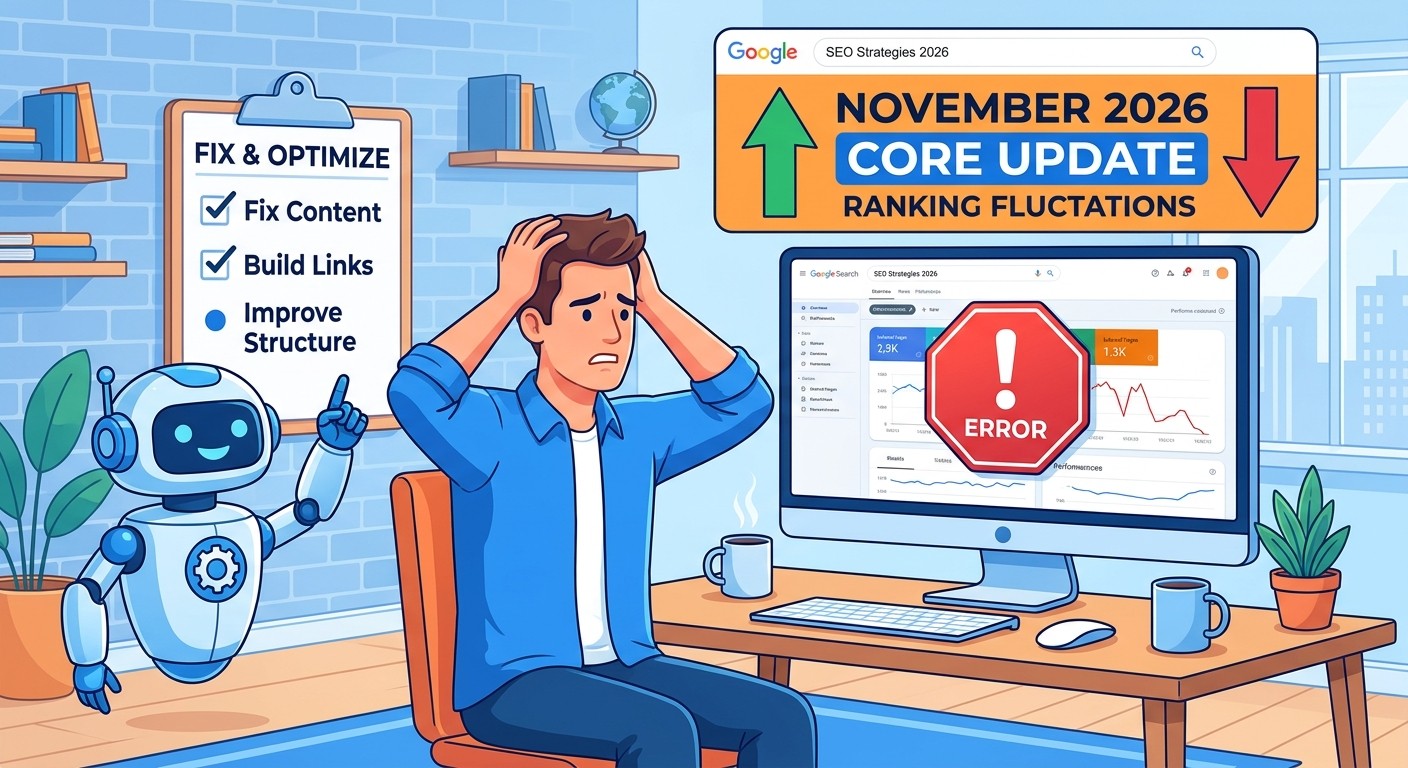
Quick Summary: Google began rolling out the November 2026 Core Update on November 10, 2026. It is a global update that applies to all languages and can take up to two weeks to complete. If your rankings dropped, do not panic and do not make rapid changes. Wait for the rollout to finish, then audit your most affected pages. Focus on demonstrating E-E-A-T, covering the full query fan-out for your topics, and improving content quality for real people. Recovery is not guaranteed immediately but requires consistent, helpful content.
Hello! If you woke up today and saw your traffic graph in Google Search Console taking a nosedive, you are not alone. On November 10, 2026, Google started rolling out its third core update of the year: the November 2026 Core Update. This is a massive, global change that affects search rankings across all languages and countries[reference:2].
In this detailed guide, I will explain exactly what this update is, why it matters, and the exact step-by-step framework to recover if you have been hit. We will also look at a new concept called "Query Fan-Out" that is critical for 2026 SEO.
Let's dive in.
What is the November 2026 Core Update?
A core update is a broad, significant change to Google's search algorithms and systems. Unlike smaller, unannounced updates, Google announces core updates because they can cause major ranking shifts for many websites[reference:3].
Google started rolling out this update at 10:06 AM Pacific Time on November 10, 2026. The full rollout is expected to take up to two weeks to complete[reference:4]. This means you may see rankings fluctuate for several days. Do not panic if your rankings go up and down during this period; it is completely normal.
Google has stated that this is a "regular update designed to better surface relevant, satisfying content for searchers from all types of sites"[reference:5]. In simple words, Google wants to reward websites that provide genuinely helpful, high-quality content and penalize websites that produce content just for search engines.
Why Was Your Site Hit? The Real Reasons
If your rankings dropped, it is not a manual penalty. It is an algorithmic re-evaluation. Google has decided that other websites are more helpful for the queries you were ranking for. Here are the most common reasons:
1. You Are Not Demonstrating E-E-A-T
E-E-A-T stands for Experience, Expertise, Authoritativeness, and Trustworthiness. Google wants to see that your content is written by someone who actually knows the topic. If your articles have no author bio, no real credentials, and no first-hand experience, you are at risk. You can read our guide on What is Entity Salience in SEO to understand how to build authority.
2. Your Content is "Commodity" Content
Commodity content is content that is generic, easily replicated, and does not add anything new. If your article is just a summary of what everyone else has said, Google will not rank it. You need original data, unique insights, or a fresh perspective.
3. You Are Not Covering the "Query Fan-Out"
This is the most important new concept for 2026. When a user asks an AI-powered search engine a question, the AI does not just run one query. It breaks the question into multiple related searches behind the scenes. This is called Query Fan-Out[reference:6]. Searches for the term "query fan-out" are up 2,550% year over year[reference:7]. If your content only answers the main question but ignores the follow-up questions, you will lose rankings.
The Core Update Recovery Framework
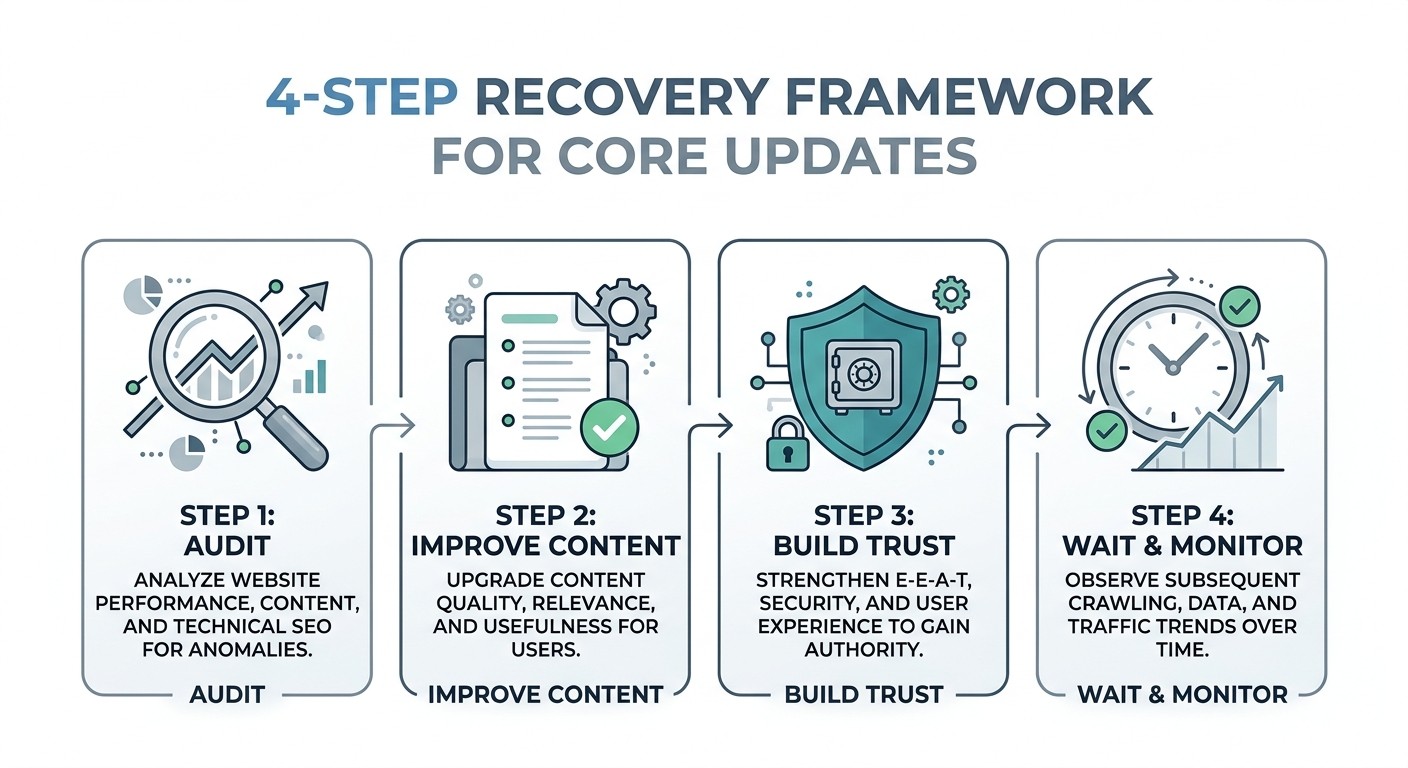
If you have been hit, do not make rushed changes. Follow this proven four-step framework to recover.
Step 1: Wait for the Rollout to Complete
Google's documentation recommends waiting at least a full week after the completion of a core update before making major changes[reference:8]. The rollout may take up to two weeks. So, wait until the rollout is complete (around November 24, 2026) before you start editing your content. If you make changes during the rollout, you will not know if your changes worked or if the rollout caused the shift.
Step 2: Audit Your Most Affected Pages
Once the update is complete, go to Google Search Console and compare the last 28 days of data to the previous 28 days. Identify the pages that lost the most impressions and clicks. Export this list to a spreadsheet.
Step 3: Improve Content Quality and E-E-A-T
For each affected page, ask yourself: What would make this page the best resource on the internet? Here is what you need to do:
- Add original data, screenshots, or case studies.
- Add a real author bio with credentials.
- Include quotes from experts or your own experience.
- Update outdated information.
- Improve internal linking to the page.
Step 4: Cover the Full Query Fan-Out
This is the secret weapon. Instead of just answering the main keyword, answer all the follow-up questions. Use tools like AlsoAsked, Google's People Also Ask, and ChatGPT to find these questions. Create dedicated sections for each follow-up question and answer them in 40 to 60 words. You can read our full guide on Conversational Search Optimization for a deeper dive.
What NOT to Do After a Core Update
- Do not delete all your content: This is a common panic reaction. Unless the content is truly terrible, do not delete it. Improve it instead.
- Do not buy backlinks: This will not help and can make things worse.
- Do not use AI to spam content: Google is very good at detecting low-quality AI content. You can use AI for research and outlines, but the final content should be human-edited and add unique value.
A Note from the Developer
"When the May 2026 core update hit, one of my clients lost 60% of their traffic in three days. We did not panic. We waited for the rollout to finish, then audited the top 20 affected pages. We added original case studies, author bios, and started covering the full query fan-out. It took six weeks, but their traffic recovered and exceeded pre-update levels. The key is patience and focusing on real quality, not quick fixes." — Habib Ur Rehman
Frequently Asked Questions (FAQ)
When did the November 2026 core update start?
Google began rolling out the November 2026 core update on November 10, 2026. It applies globally and to all languages, and the rollout can take up to two weeks to complete.
How long does it take to recover from a core update?
Recovery is not guaranteed and can take months. It often requires significant improvements to content quality. Google has said that the biggest changes tend to follow another core update, so recovery is not immediate.
What is 'query fan-out' and why does it matter?
Query fan-out is when AI breaks a single user query into multiple related searches behind the scenes. To rank, you need to cover the entire topic space, not just one keyword. Searches for 'query fan-out' are up 2,550% year over year.
Conclusion
The November 2026 Core Update is a reminder that Google's number one priority is helpful, people-first content. If your traffic dropped, use this as an opportunity to improve your website. Follow the recovery framework, wait for the rollout to finish, and focus on quality. Your rankings will recover if you put in the work.
If you want to check your site's technical health, use our free Speed Checker and Broken Link Checker. Happy optimizing!
Explore More Free SEO Tools
Written and reviewed by: Habib Ur Rehman, Full-Stack Web Developer & SEO Specialist.
Last Updated: November 11, 2026.