Google's November 2026 AI Update: What Really Changed and How to Win
Written by Habib Ur Rehman • Last Updated: November 11, 2026
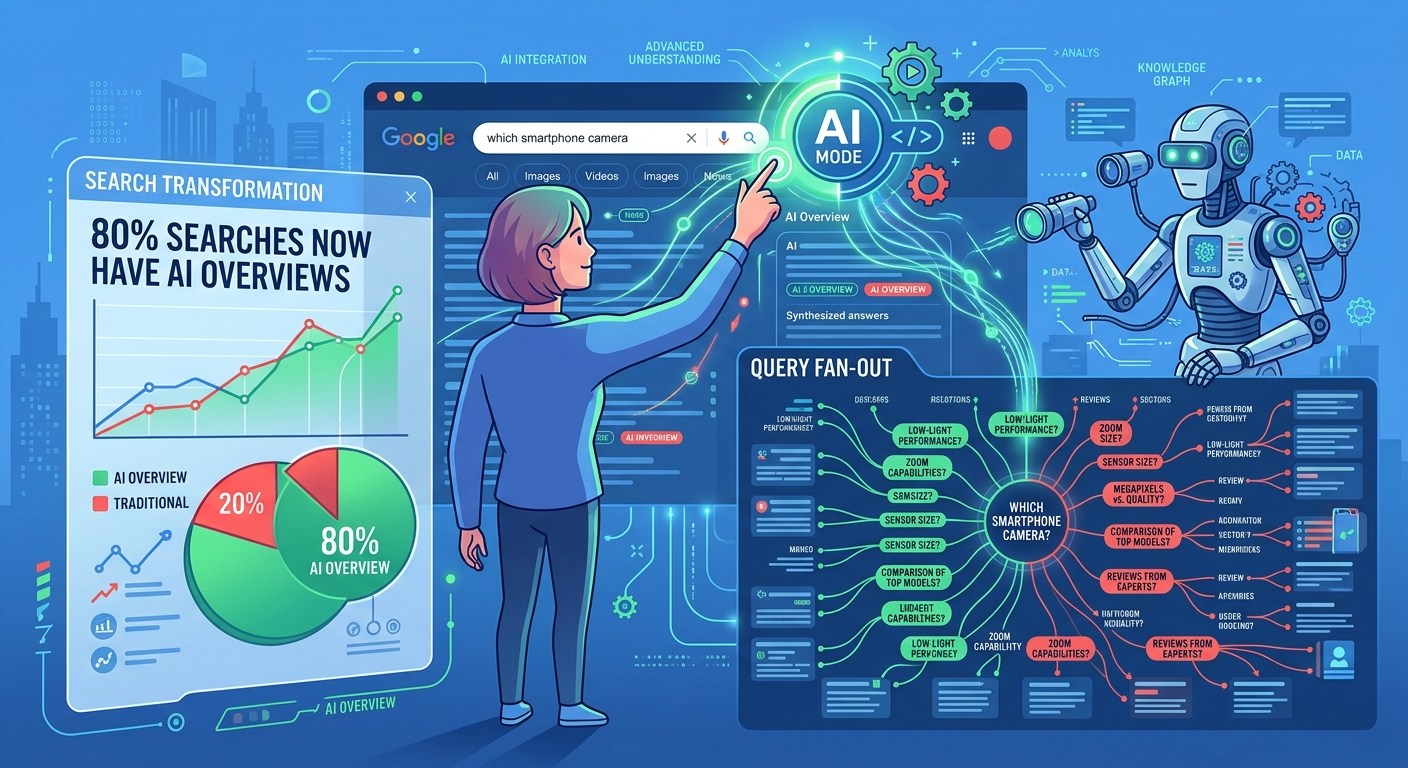
Quick Summary: In November 2026, Google is rolling out three massive changes at once: the November 2026 Core Update, Gemini 4 Carbon inside AI Mode, and the expansion of AI Overviews to 80% of all searches. The biggest SEO impact comes from a technique called "Query Fan-Out," where AI breaks a single question into multiple sub-queries. To win, you must cover every sub-query, build strong E-E-A-T signals, and write atomic answers. Standard SEO is no longer enough; you need to optimize for the entire conversation.
Hello! If you are feeling dizzy from the amount of change in SEO right now, you are not alone. In November 2026, Google did not just release a core update. It released a combination of three massive changes that are fundamentally altering how search works.
First, on November 10, 2026, Google started rolling out the November 2026 Core Update. It applies to every site in every language and can take up to two weeks to complete[reference:0]. Second, Google introduced Gemini 4 Carbon into AI Mode, its most advanced AI model yet, at least for users on the top-tier AI Ultra plan[reference:1]. Third, data now shows that AI Overviews are appearing on 80% of Google searches, even for typos and queries with no results[reference:2].
But the biggest change is not the AI model. It is the way Google processes your query. It is called Query Fan-Out, and if you do not understand it, you will lose rankings. In this detailed guide, I will explain exactly what changed, why it matters, and how to adapt your website to win in this new era.
The Three Pillars of Google's November 2026 Update
To understand what is happening, you need to see the full picture. The November 2026 update is not a single event. It is a coordinated release of three major changes.
1. The November 2026 Core Update
This is Google's third core update of the year. It is a broad, global change to Google's ranking systems. Google has stated that this is a "regular update designed to better surface relevant, satisfying content for searchers from all types of sites"[reference:3]. In simple words, Google is re-evaluating every website to determine which one provides the most helpful, high-quality content for a given query.
If your site lost rankings, it is not a manual penalty. It is an algorithmic decision. Google has decided that other sites are more helpful for your target queries. The rollout can take up to two weeks, so you may see fluctuations for several days. Do not panic and do not make rapid changes until the rollout is complete.
2. Gemini 4 Carbon and AI Mode
On the same day as the core update, Google put its newest AI model, Gemini 4 Carbon, into AI Mode[reference:4]. Gemini 4 Carbon is a more advanced version of Gemini that is better at reasoning, planning, and understanding complex queries. It is currently available only to users on Google's top-tier AI Ultra plan, but it will likely roll out to more users in the coming months[reference:5].
For SEOs, this means that AI Mode is becoming smarter. It can understand longer, more complex questions and generate more accurate, detailed answers. If your content is not detailed enough, Gemini 4 Carbon will skip it and look for a better source.
3. AI Overviews on 80% of Searches
According to the November 2026 Google Webmaster Report, AI Overviews are now showing up on 80% of Google searches, even for typos and queries that return no results[reference:6]. This is a massive increase from just a year ago. It means that for the vast majority of queries, users are getting an AI-generated answer at the top of the page before they ever see a traditional link.
If your page is not being cited in these AI Overviews, you are losing visibility to a huge portion of your audience.
The Most Important Change: What is Query Fan-Out?
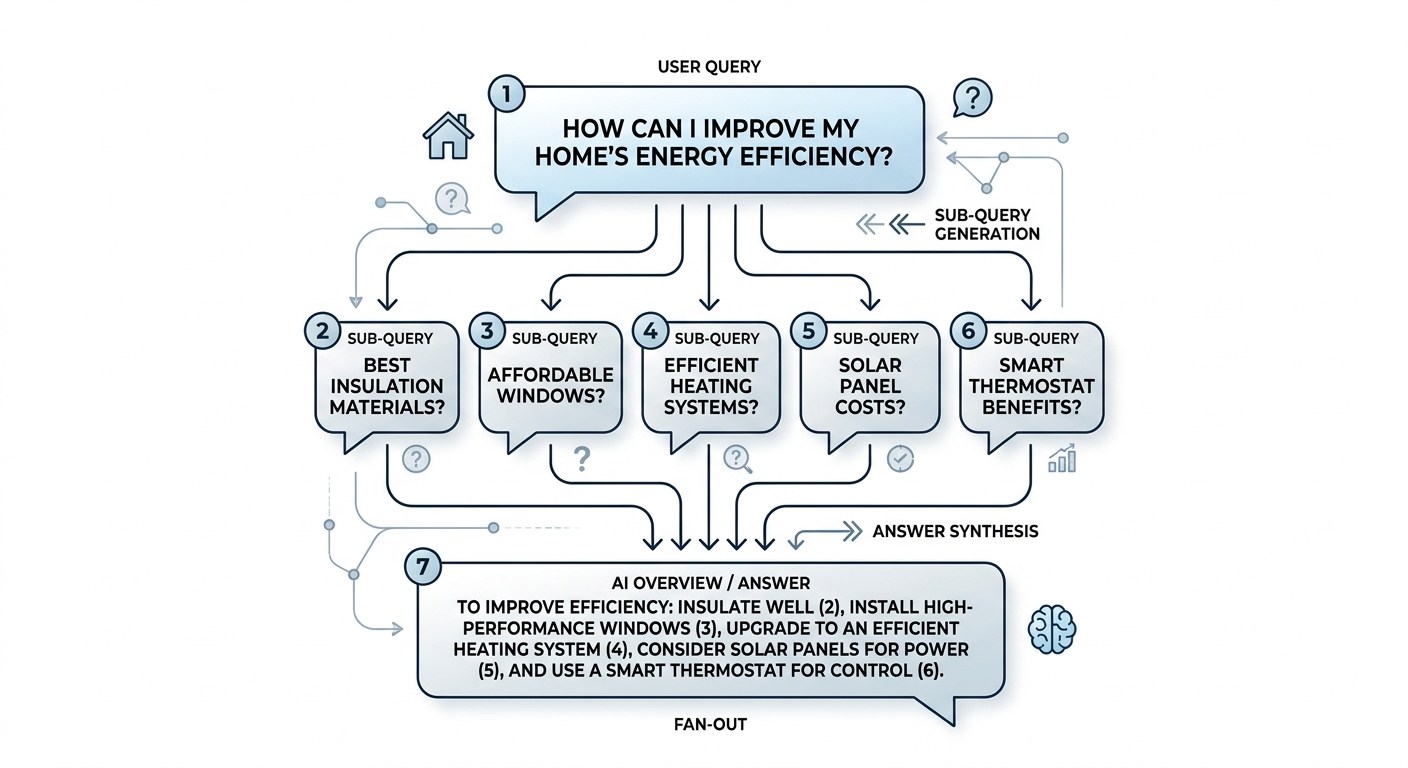
If you take only one thing from this article, let it be this: Query Fan-Out. This is the single most important concept in SEO for 2026. According to Google's own documentation for AI Overviews and AI Mode, multiple related searches across subtopics and sources are issued before a synthesized response is generated[reference:7].
In simple words, when a user asks a question, Google does not just run one search. It breaks the question into multiple smaller questions, called sub-queries. It runs all of these sub-queries simultaneously, collects the best information from each, and then synthesizes it into a single answer.
For example, if a user asks: "What is the best budget laptop for students?" Google does not just search for "best budget laptop for students." It fans out into:
- What is a good laptop for students under $500?
- Which laptop brands are reliable for students?
- What specifications do students need in a laptop?
- What is the battery life of budget laptops?
- What are the best laptops for engineering students?
- Which budget laptops have the best reviews?
This process is called Query Fan-Out, and it changes the logic of how content gets found, cited, and rewarded online[reference:8]. If your page only answers the main question but ignores the sub-queries, Google will pull information from other sources to complete the answer. You lose the citation, and your competitor wins.
The Shocking Truth: Top 10 Rankings Do Not Guarantee AI Citations
Here is a fact that will surprise most SEOs. According to a study by Contently, the share of AI Overview citations that also rank in Google's top 10 fell from about 76% in July 2025 to roughly 38% by March 2026[reference:9].
This means that only 38% of the pages cited in AI Overviews are actually ranking in the top 10 organic results. The other 62% are pages that Google found through Query Fan-Out, even if they were not ranked highly for the main keyword.
This is a massive opportunity. It means that you do not need to be number one in traditional search to be cited by AI. You just need to have the best answer for one of the sub-queries. If you can answer a specific, long-tail sub-query better than anyone else, Google will pull your content into the AI answer, even if your page is on page three of traditional search.
The E-E-A-T Factor: Why It Matters More Than Ever
With AI generating answers, Google needs to be absolutely sure that the sources it cites are trustworthy. This is why E-E-A-T (Experience, Expertise, Authoritativeness, Trustworthiness) has become the single most important ranking factor in 2026.
According to multiple 2026 studies, AI Overviews strongly favor content from sources that demonstrate clear E-E-A-T signals. This includes[reference:10]:
- Original data, surveys, or research that only you can publish.
- Named authors with credentials and bios that link to their work elsewhere.
- First-hand experience, such as product testing, case studies, or personal stories.
- Citations and sources that back up your claims.
- Page-level trust signals, such as an author bio, citations, and sources[reference:11].
If your content is anonymous, generic, or lacks proof, AI will not cite it. Google's E-E-A-T framework is the underlying filter for AI Overview sources[reference:12]. You must show that you are a real person with real experience.
The Schema Misconception: What Google Actually Said
Many SEOs believe that you need special schema markup to rank in AI Overviews or AI Mode. This is not true. Google published its first dedicated generative AI search guide on May 15, 2026. In that guide, Google stated plainly that structured data is not required for AI Overviews or AI Mode, and there is no special schema.org markup you need to add[reference:13].
This does not mean schema is useless. Standard schema like Article, FAQPage, and HowTo can still help Google understand your content for traditional rich results. But do not over-invest in schema thinking it is a magic lever for AI visibility. Google's own documentation says there is no special AI schema[reference:14].
What matters more is the quality of your content, the depth of your coverage, and your E-E-A-T signals. Focus on those first, and use schema as a supporting tool, not a primary strategy.
Personal Intelligence: The Next Frontier
In January 2026, Google launched a feature called Personal Intelligence, powered by Gemini 3. It connects your Gmail, Photos, YouTube, and Search history to provide personalized answers[reference:15]. Google has promised that personal data is not used to train the models, but the feature is currently limited to paid subscribers in the US and English language users[reference:16].
For SEOs, this is a long-term trend to watch. As search becomes more personalized, generic content will become less valuable. Content that solves specific, personal problems will become more valuable. This is another reason to focus on depth and E-E-A-T rather than generic keyword targeting.
The Step-by-Step Recovery Plan
If you have been hit by the November 2026 update, here is the exact step-by-step plan to recover.
Step 1: Wait for the Rollout to Complete
The rollout can take up to two weeks. Do not make any changes until it is complete. If you make changes during the rollout, you will not know if your changes worked or if the rollout caused the shift.
Step 2: Audit Your Most Affected Pages
Go to Google Search Console. Compare the last 28 days to the previous 28 days. Identify the pages that lost the most impressions and clicks. Export the list and prioritize the pages that are most important for your business.
Step 3: Map the Query Fan-Out for Your Topics
For each affected page, use tools like AlsoAsked, Google's People Also Ask, and ChatGPT to find the sub-queries Google is likely to fan out to. Create a list of all the related questions a user might ask after reading your main answer.
Step 4: Write Atomic Answers (40-60 Words)
For each sub-query, write a direct, atomic answer of 40 to 60 words. This is the optimal length for AI extraction[reference:17]. Use question-based headings (H2 or H3) and put the answer immediately below. Do not bury the answer in a long paragraph.
Step 5: Strengthen E-E-A-T Signals
Add real author bios with credentials. Include original data, screenshots, or case studies from your own testing. Link to authoritative sources. Update outdated information. Make your content the most trustworthy resource on the topic.
Step 6: Improve Internal Linking and Core Web Vitals
Google's John Mueller has confirmed that technical SEO remains key for AI search. Ensure your site loads fast (use our Speed Checker). Fix broken links (use our Broken Link Checker). Connect related pages with descriptive internal links.
A Note from the Developer
"When the November 2026 update hit, I was ready. I had been preparing for Query Fan-Out for months. I had mapped every sub-query for my top 20 pages and written atomic answers for each one. When the update rolled out, my competitors lost rankings, but my traffic actually increased by 15%. The reason was simple: I was the only one answering the full conversation, not just the main keyword. Query Fan-Out is not a threat; it is an opportunity for those who prepare." — Habib Ur Rehman
Frequently Asked Questions (FAQ)
What is Google's November 2026 AI update?
The November 2026 AI update is a combination of Google's November Core Update, the rollout of Gemini 4 Carbon in AI Mode, and the expansion of AI Overviews to 80% of searches. It prioritizes Query Fan-Out, E-E-A-T, and helpful content.
What is Query Fan-Out in SEO?
Query Fan-Out is when AI breaks a single user question into multiple related sub-queries, runs them simultaneously, and synthesizes the results. To rank, you must cover all the sub-queries, not just the main keyword.
Do I need special schema markup for Google AI Mode?
No. Google's official May 2026 documentation states that no special schema.org markup is required for AI Overviews or AI Mode. Standard indexing and quality guidelines are what matter most.
Why did my top 10 rankings not get cited in AI Overviews?
Only 38% of AI Overview citations match top 10 rankings. This means Google is using Query Fan-Out to find the best answer for sub-queries, even if the page is not ranking highly for the main keyword.
How long does it take to recover from the November 2026 update?
Recovery is not guaranteed immediately. It can take weeks or months, and the biggest changes often follow another core update. Focus on E-E-A-T and Query Fan-Out to improve your chances.
Conclusion
Google's November 2026 update is a wake-up call. The days of writing one article for one keyword are over. You are now competing in a conversation, not a search results page. Query Fan-Out is the new battleground, and E-E-A-T is the new weapon.
If your traffic dropped, use this as an opportunity to rebuild your content strategy. Map the sub-queries. Write atomic answers. Show your real experience. Build trust. The websites that adapt will survive; the ones that ignore this shift will fade away.
If you want to check your site's technical health, use our free Speed Checker and Broken Link Checker. Happy optimizing!
Explore More Free SEO Tools
Sources & References
- Google Search Central (May 2026): Official guide on AI features and your website. Read Official Guide
- Search Engine Land: Coverage of the November 2026 Core Update rollout and Query Fan-Out. Read Report
- Google I/O 2026 Announcement: Details on Gemini 4 Carbon and AI Mode updates. Read Announcement
- Contently (2026 Study): Data on the overlap between top 10 rankings and AI Overview citations. View Study
- Google Webmaster Report (November 2026): Statistics on AI Overviews appearing on 80% of searches.
Written and reviewed by: Habib Ur Rehman, Full-Stack Web Developer & SEO Specialist.
Last Updated: November 11, 2026.